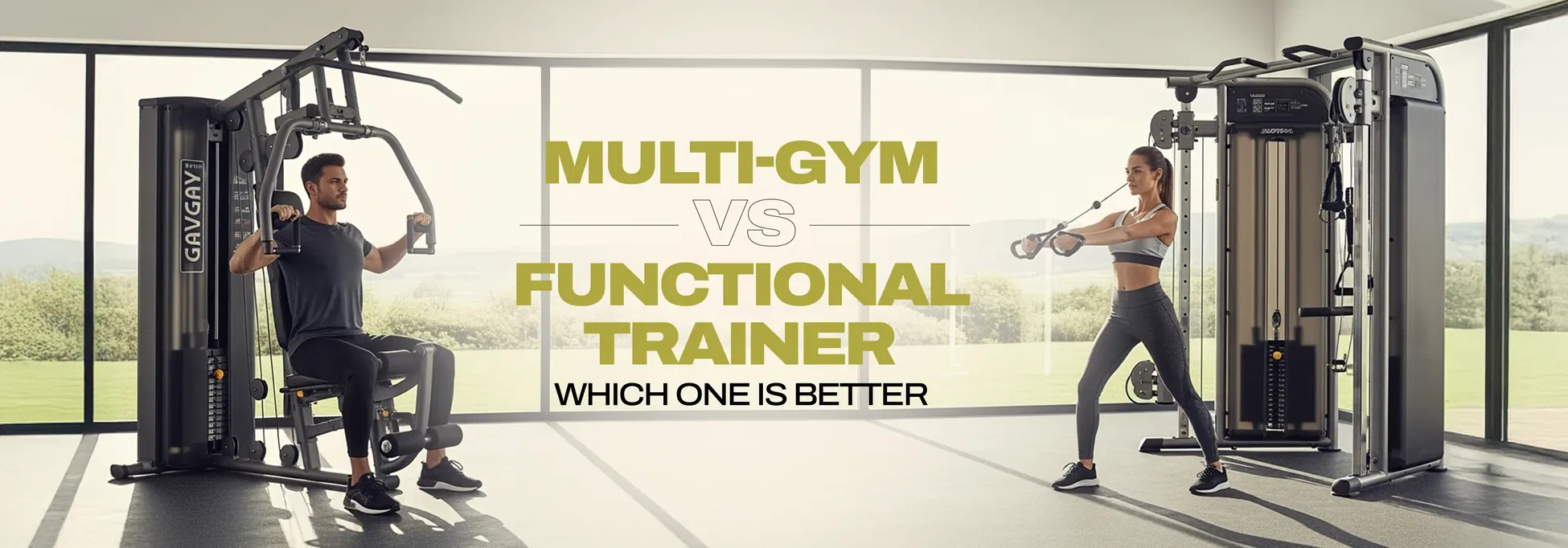
Multi-Gym vs. Functional Trainer: Which One is Better?
Choosing the right home gym equipment can make or break your fitness journey. Two popular options dominate the market: multi-gym and functional trainer. Both promise comprehensive workouts, but they deliver results through different approaches. Understanding their unique characteristics will help you make an informed decision that aligns with your fitness goals and budget.
What is a Multi-Gym?
A multi-gym combines multiple exercise stations into one compact machine. Traditional multi-gyms use a weight stack system with pulleys, cables, and various attachments to target different muscle groups. You can perform exercises like lat pulldowns, chest presses, leg extensions, and seated rows without switching between separate machines.
These machines typically feature a central weight stack that powers all exercise stations through a series of cables and pulleys. Most multi-gyms include a bench press station, lat pulldown bar, low pulley for rowing, and leg extension/curl attachments.
What is a Functional Trainer?
Functional trainers focus on natural movement patterns that mirror real-life activities. These machines use dual cable systems with adjustable height pulleys, allowing you to perform exercises in multiple planes of motion. The design emphasizes functional strength, stability, and coordination rather than isolated muscle development.
Unlike traditional multi-gyms, functional trainers encourage three-dimensional movement patterns. You can perform squats, lunges, rotational movements, and compound exercises that engage multiple muscle groups simultaneously.
Detailed Comparison
| Feature | Multi-Gym | Functional Trainer |
|---|---|---|
| Exercise Variety | 40-60 exercises | 100+ exercises |
| Movement Patterns | Fixed, linear movements | Free-form, 3D movements |
| Space Required | 6x8 feet | 8x8 feet |
| Weight Resistance | Stack weights (100-200 lbs) | Stack weights (150-300 lbs) |
| Learning Curve | Beginner-friendly | Moderate to advanced |
| Price Range | $800-$3,000 | $2,000-$8,000 |
| Setup Time | 2-4 hours | 4-6 hours |
| Maintenance | Low | Low to moderate |
Multi-Gym Pros and Cons
Pros
- Perfect for beginners who need guided movement patterns
- Takes up less floor space than separate machines
- Offers solid muscle isolation capabilities
- Provides consistent resistance throughout the full range of motion
- Features built-in safety mechanisms that prevent injury
- Requires minimal learning curve for basic exercises
- Costs significantly less than buying multiple individual machines
- Easy to follow structured workout routines
Cons
- Limits you to predetermined movement paths
- Doesn't improve functional strength as effectively
- May not accommodate users of all heights comfortably
- Offers fewer exercise variations compared to free weights
- Cannot replicate sport-specific movement patterns
- Switching between exercises can be time-consuming
- Weight increments may be too large for progressive overload
- Doesn't engage stabilizer muscles as effectively
Functional Trainer Pros and Cons
Pros
- Allows unlimited exercise variations and creativity
- Improves functional strength that transfers to daily activities
- Accommodates users of different heights and body types
- Engages core and stabilizer muscles in every movement
- Supports sport-specific training and rehabilitation exercises
- Offers smooth, consistent resistance in all directions
- Enables single-arm and unilateral training options
- Provides excellent value for serious fitness enthusiasts
Cons
- Requires higher investment upfront
- Demands more space for safe operation
- Has a steeper learning curve for beginners
- Needs proper form instruction to prevent injury
- May overwhelm users with too many exercise options
- Requires more time to master advanced movement patterns
- Cable maintenance can be more complex
- Some exercises may require additional accessories
Which One Should You Choose?
Your choice depends on several key factors that align with your specific situation and goals.Choose a Multi-Gym if you:
- Are new to strength training and prefer guided movements
- Have limited space in your home gym
- Want a straightforward approach to muscle building
- Prefer structured workouts with clear exercise paths
- Have a modest budget for home gym equipment
- Value simplicity and ease of use over exercise variety
Choose a Functional Trainer if you:
- Have experience with strength training and proper form
- Want to improve functional movement patterns
- Have adequate space for the equipment and exercise movements
- Are willing to invest more for greater exercise variety
- Plan to use the equipment for sports-specific training
- Value long-term versatility and workout progression
Space and Budget Considerations
Multi-gyms typically require a 6x8 foot footprint, while functional trainers need at least 8x8 feet for safe operation. Consider ceiling height as well, since both machines require 8-9 feet of clearance for overhead movements.
Budget-wise, quality multi-gyms start around AED 1800, while functional trainers begin at AED 4500. Factor in delivery, assembly, and potential flooring modifications when calculating total costs.
The Bottom Line
Both multi-gyms and functional trainers can deliver excellent results when used consistently and properly. Multi-gyms excel at providing structured, safe workouts for beginners and those with space constraints. Functional trainers offer superior versatility and functional strength development for experienced users willing to invest more.
Consider your current fitness level, available space, budget, and long-term goals when making your decision. Remember that the best equipment is the one you'll actually use consistently. Whether you choose the guided approach of a multi-gym or the versatile nature of a functional trainer, both can help you achieve your fitness objectives when combined with proper programming and dedication.
 مساعدة