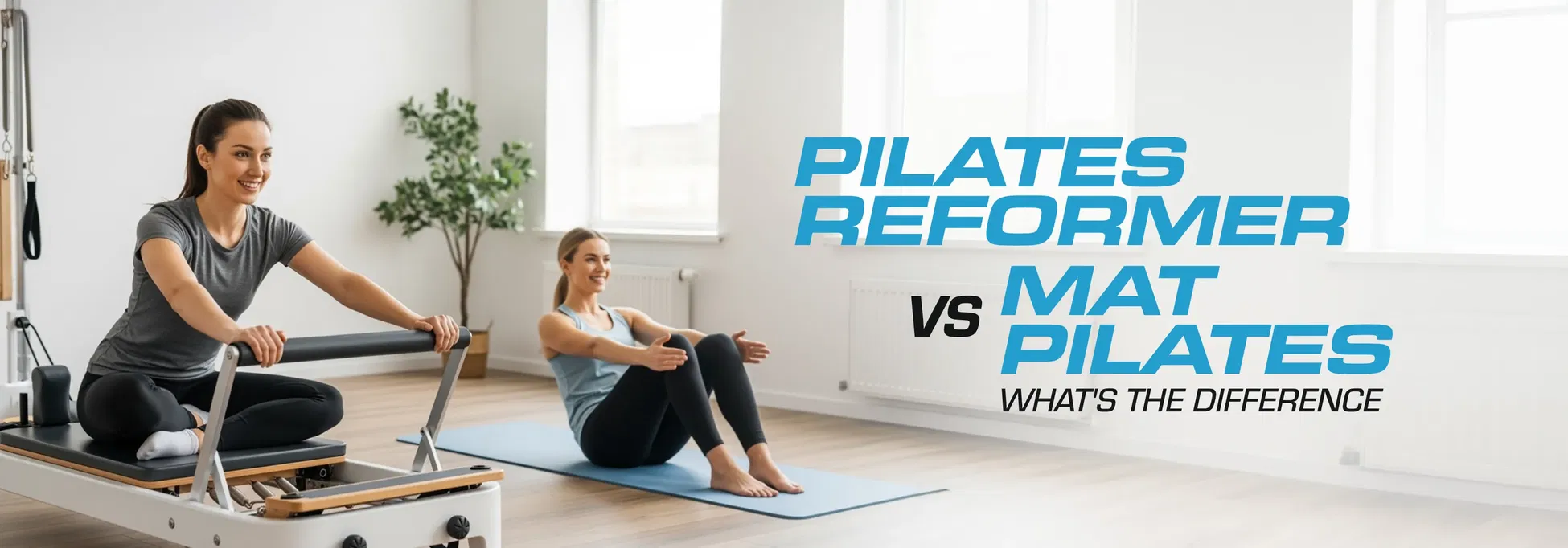
Pilates Reformer vs Mat Pilates: What's the Difference?
When you step into a Pilates studio, you'll likely encounter two distinct approaches to this transformative exercise method: mat Pilates and reformer Pilates. Both practices stem from Joseph Pilates' original principles, yet they offer remarkably different experiences. Understanding these differences will help you choose the path that best serves your fitness goals and personal preferences.
What is Mat Pilates?
Mat Pilates brings you back to the fundamentals of Joseph Pilates' original system. You perform exercises on a simple mat using your body weight as primary resistance. This approach emphasizes core strength, flexibility, and precise movement patterns without requiring specialized equipment.
Key Characteristics of Mat Pilates:
- Bodyweight focus: You rely entirely on your own resistance and gravity
- Accessibility: Requires minimal equipment beyond a quality exercise mat
- Classical foundation: Follows the traditional sequence Joseph Pilates developed
- Group class friendly: Instructors can easily teach large groups simultaneously
- Mental concentration: Demands intense focus to maintain proper form without equipment assistance
Mat Pilates challenges you to develop intrinsic strength and body awareness. Every movement requires you to engage your core while maintaining proper alignment and breathing patterns. The absence of equipment assistance means your muscles work harder to stabilize and control each position.
Understanding Reformer Pilates
Reformer Pilates transforms your workout experience through the use of Joseph Pilates' most famous invention: the reformer machine. This sophisticated apparatus features a sliding carriage, springs of varying resistance, pulleys, and straps that create a dynamic, three-dimensional workout environment.
Essential Components of the Reformer:
- Sliding carriage: Moves smoothly on rails, creating instability that challenges your core
- Spring system: Provides variable resistance that you can adjust throughout exercises
- Foot bar: Serves as a stable platform for pushing and pulling movements
- Straps and pulleys: Enable upper and lower body exercises with smooth resistance
- Headrest and shoulder blocks: Provide support and proper positioning
The reformer's spring system creates what Joseph Pilates called "controlled resistance." Unlike free weights that rely on gravity, springs provide consistent tension throughout the entire range of motion. This unique characteristic allows for both strengthening and lengthening of muscles simultaneously.
The Equipment Advantage: Why Reformers Transform Your Practice?
1) Enhanced Resistance Options
The reformer's spring system offers multiple resistance levels that you can adjust mid-exercise. Light springs provide gentle assistance for beginners or rehabilitation work, while heavy springs challenge even advanced practitioners. This versatility allows for progressive overload, a crucial principle for continued strength development.
Mat Pilates, while effective, limits your resistance options to body weight and gravity. Advanced practitioners often find themselves plateauing as they master the classical exercises without additional challenge.
2) Superior Support and Alignment
The reformer provides crucial support that helps you maintain proper form throughout challenging movements. The carriage, headrest, and shoulder blocks create a stable platform that allows you to focus on movement quality rather than struggling to maintain basic positioning.
This support proves particularly beneficial for:
- Beginners learning proper Pilates techniques
- Individuals with injuries requiring additional stability
- Advanced practitioners attempting complex movement patterns
- People with flexibility limitations who need assistance achieving full range of motion
3) Increased Exercise Variety
Reformer Pilates offers exponentially more exercise possibilities than mat work. The apparatus enables movements in multiple planes and positions that prove impossible on a mat. You can perform exercises standing, lying supine or prone, sitting, kneeling, or even in inverted positions.
Popular Reformer Exercises Include:- Footwork series: Develops leg strength and alignment while lying supine
- Short box series: Challenges core strength and spinal mobility in seated position
- Long stretch series: Builds total body integration through plank variations
- Rowing series: Strengthens posterior chain while improving posture
- Leg and arm springs: Target specific muscle groups with precise resistance
4) Precision Through Feedback
The reformer provides immediate feedback through its moving parts and spring tension. You instantly feel when your form breaks down or when you lose control of the movement. This built-in feedback system accelerates learning and promotes better movement patterns.
Mat Pilates requires you to develop this proprioceptive awareness independently, which takes considerably more time and practice to achieve.
Mat Pilates: The Foundation That Never Fails
Despite the reformer's advantages, mat Pilates offers unique benefits that make it an essential component of any well-rounded practice.
1) Develops True Core Strength
Mat Pilates demands that your core muscles work overtime to stabilize your body without external assistance. This requirement develops functional strength that translates directly to daily activities and athletic performance.
2) Builds Mental Focus and Body Awareness
Without equipment to guide your movements, mat Pilates requires intense concentration and mindfulness. You must rely entirely on your internal awareness to maintain proper form and execute movements precisely. This mental training proves invaluable for stress reduction and mind-body connection.
3) Offers Ultimate Convenience
Mat Pilates provides unmatched accessibility. You can practice anywhere with just a mat, making it perfect for:
- Travel workouts when you're away from studios
- Home practice without expensive equipment
- Outdoor sessions in parks or beaches
- Budget-conscious fitness without studio fees
4) Teaches Movement Fundamentals
Every Pilates practitioner benefits from regular mat work, regardless of their primary practice. Mat exercises teach the fundamental movement patterns and principles that enhance performance on all Pilates equipment.
Who Should Choose Reformer Pilates?
Ideal Candidates for Reformer Training:
- Beginners seeking proper form guidance and support
- Individuals recovering from injuries who need gentle, controlled movements
- Athletes looking to enhance performance through varied resistance training
- Advanced practitioners wanting to progress beyond bodyweight limitations
- People with specific goals such as improved flexibility or targeted strengthening
- Those seeking variety who enjoy diverse, challenging workouts
Consider Reformer If You:
- Want faster progression in strength and flexibility
- Enjoy equipment-based training
- Have access to qualified instructors and quality equipment
- Can invest in regular studio sessions or home equipment
- Prefer supported movements over pure bodyweight exercises
Who Thrives with Mat Pilates?
Perfect Candidates for Mat Practice:
- Purists who appreciate the classical Pilates approach
- Budget-conscious individuals seeking effective exercise without equipment costs
- Frequent travelers who need portable workout solutions
- Group fitness enthusiasts who enjoy communal energy
- Self-motivated practitioners who thrive on mental challenges
- Those building foundational strength before progressing to equipment
Choose Mat Pilates If You:
- Prefer minimalist approaches to fitness
- Want to develop deep core strength and stability
- Enjoy the meditative aspects of movement practice
- Have limited space for equipment
- Value the convenience of practicing anywhere, anytime
Making Your Decision: Practical Considerations
- Budget Factors: Mat Pilates requires minimal financial investment beyond a quality mat and occasional class fees. Reformer Pilates demands higher costs for studio sessions, private training, or equipment purchase.
- Time and Accessibility: Mat Pilates offers ultimate flexibility in scheduling and location. Reformer training typically requires studio visits or significant home space for equipment.
- Learning Curve: Mat Pilates presents a steeper initial learning curve as you develop stability and control independently. Reformer training often feels more accessible initially due to equipment support.
- Long-term Goals: Consider your ultimate fitness objectives. If you seek maximum strength, flexibility, and movement variety, reformer training provides superior options. If you value simplicity, convenience, and foundational strength, mat Pilates serves you well.
The Verdict
Both mat and reformer Pilates offer valuable benefits, but equipment truly transforms the Pilates experience. The reformer's versatility, support, and resistance options create opportunities impossible with mat work alone. However, mat Pilates provides an essential foundation that enhances any Pilates practice.
Your choice ultimately depends on your goals, preferences, budget, and lifestyle. Many practitioners find that combining both approaches creates the most comprehensive and sustainable Pilates journey. Whether you choose the classical simplicity of mat work or embrace the innovation of reformer training, you're embarking on a transformative fitness journey that will challenge your body and mind in remarkable ways. The key lies in choosing the approach that resonates with your needs and committing to consistent, mindful practice.
 مساعدة