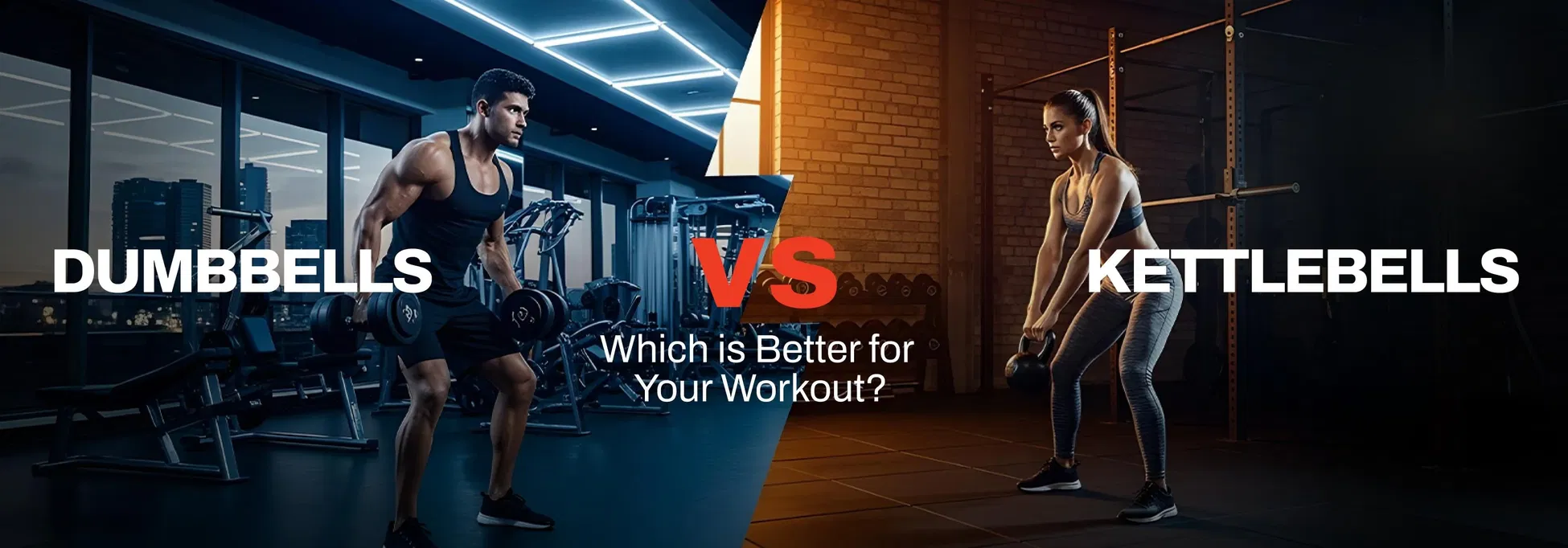
Dumbbells vs. Kettlebells - Which is Better for Your Workout?
Choosing between dumbbells and kettlebells can make or break your fitness journey. Both tools build strength and muscle effectively. However, each offers unique advantages that suit different workout styles and goals. Most gym-goers face this problem when starting their strength training routine. The right choice depends on your fitness level, goals, and personal preferences. Let's break down everything you need to know.
What Are Dumbbells?
Dumbbells feature two equal weights connected by a handle in the center. They come in fixed weights or adjustable versions. Most gyms stock dumbbells ranging from 5 pounds to over 100 pounds. These classic weights have dominated strength training for centuries. Their simple design allows precise muscle targeting and controlled movements. Beginners often start with dumbbells because they feel familiar and safe.
What Are Kettlebells?
Kettlebells look like cannonballs with handles attached on top. The weight sits below your grip, creating an off-center load. This unique design challenges your stability and core muscles during every movement. Russian strongmen popularized kettlebells in the 18th century. They've experienced a massive comeback in modern fitness culture. Their distinctive shape enables dynamic, explosive movements that dumbbells cannot replicate.
Dumbbell Benefits: Why They Excel?
- Precise Muscle Isolation: Dumbbells excel at targeting specific muscle groups with surgical precision. You can isolate your biceps, triceps, or shoulders without involving other muscles. This makes them perfect for bodybuilding and rehabilitation exercises.
- Progressive Overload Made Easy: Most gyms offer dumbbells in 2.5 to 5-pound increments. This allows gradual strength progression without overwhelming your muscles. You can steadily increase weight as you grow stronger.
- Beginner-Friendly Design: New lifters find dumbbells less intimidating than kettlebells. The balanced weight distribution feels natural and secure. You can focus on learning proper form without worrying about the weight shifting.
- Versatility in Exercise Selection: Dumbbells work for every muscle group imaginable. You can perform chest presses, rows, squats, lunges, and countless other exercises. This versatility makes them ideal for full-body workouts.
- Joint-Friendly Training: The natural grip and balanced weight reduce stress on your wrists and joints. This makes dumbbells excellent for people with joint issues or injuries. You can adjust your grip angle for maximum comfort.
Kettlebell Benefits: Why They Shine?
- Superior Functional Strength: Kettlebell exercises mimic real-world movements better than dumbbells. Swings, snatches, and carries translate directly to daily activities. You build strength that actually improves your quality of life.
- Explosive Power Development: The ballistic nature of kettlebell movements builds explosive power effectively. Swings and snatches train your muscles to generate force quickly. This benefits athletes and anyone wanting dynamic strength.
- Cardio and Strength Combined: Kettlebell workouts elevate your heart rate while building muscle simultaneously. A 20-minute kettlebell session can replace separate cardio and strength training. This saves time and maximizes results.
- Core Activation Champion: Every kettlebell exercise engages your core muscles intensely. The off-center weight forces your abs and stabilizers to work constantly. You develop a rock-solid midsection without doing crunches.
- Space-Efficient Training: One kettlebell provides a complete workout in minimal space. You don't need a full rack of weights like with dumbbells. This makes kettlebells perfect for home gyms and small spaces.
Dumbbell Drawbacks: Where They Fall Short?
- Limited Functional Movement: Dumbbell exercises often involve sitting or lying down positions. These don't translate well to real-world activities. You might build muscle but miss functional strength development.
- Requires More Equipment: Effective dumbbell training needs multiple weights for progression. This requires significant space and financial investment. Home gym setups can become expensive quickly.
- Slower Calorie Burn: Traditional dumbbell exercises burn fewer calories than dynamic movements. You typically need separate cardio sessions to maximize fat loss. This extends your total workout time.
- Less Core Engagement: Many dumbbell exercises isolate muscles without challenging your core significantly. You might need additional ab-specific exercises for complete development. This adds complexity to your routine.
Kettlebell Drawbacks: Their Limitations
- Steeper Learning Curve: Kettlebell exercises require proper technique to avoid injury. Beginners often struggle with the coordination and timing required. Poor form can lead to back strain or wrist injuries.
- Limited Progressive Overload: Kettlebells typically jump in 8-9 kilogram increments between sizes. This makes gradual progression more challenging than with dumbbells. You might plateau between weight jumps.
- Grip Strength Dependency: Your grip often fails before your target muscles during kettlebell exercises. This can limit the effectiveness of your training. You might need to develop grip strength separately.
- Higher Injury Risk: The dynamic nature of kettlebell movements increases injury potential. One wrong move during a swing can strain your back. Proper coaching becomes more critical than with dumbbells.
Head-to-Head Comparison
1) For Building Muscle Mass
Winner: Dumbbells
Dumbbells allow precise muscle targeting and easier progressive overload. You can isolate specific muscles and gradually increase weight. This makes them superior for pure muscle building and bodybuilding goals.
2) For Fat Loss and Conditioning
Winner: Kettlebells
Kettlebell workouts burn more calories and improve cardiovascular fitness simultaneously. The dynamic movements elevate your heart rate significantly. You get strength and cardio benefits in one efficient session.
3) For Functional Strength
Winner: Kettlebells
Kettlebell exercises better prepare you for real-world activities. The movements train multiple muscle groups working together. This builds strength that transfers to daily life and sports.
4) For Beginners
Winner: Dumbbells
New lifters benefit from dumbbell's predictable, controlled movements. The learning curve is gentler and injury risk lower. You can master basic movement patterns before progressing to kettlebells.
5) For Home Gyms
Winner: Kettlebells
One or two kettlebells provide complete workout versatility in minimal space. Dumbbells require multiple weights for effective progression. Kettlebells offer better space efficiency and value.
6) For Athletes
Winner: Kettlebells
The explosive, multi-planar movements of kettlebell training benefit athletic performance. Power, coordination, and functional strength improvements translate to sports. Dumbbells build muscle but less athletic ability.
Expert Recommendations: What Trainers Say
Certified trainers recommend starting with dumbbells for strength training foundations. Master basic movement patterns like squats, presses, and rows first. This builds proper form and confidence before advancing.
Add kettlebells after 3-6 months of consistent dumbbell training. Start with basic swings and goblet squats under professional guidance. Gradually progress to more complex movements as your skill develops.
Many successful fitness enthusiasts use both tools strategically. They perform isolation work with dumbbells and dynamic movements with kettlebells. This combination maximizes both muscle building and functional strength.
Choosing Based on Your Goals
Choose Dumbbells If You Want To:
- Build maximum muscle mass and size
- Target specific muscle groups precisely
- Follow traditional bodybuilding routines
- Recover from injuries safely
- Start strength training as a beginner
- Have unlimited space and budget
Choose Kettlebells If You Want To:
- Improve functional, real-world strength
- Burn fat while building muscle
- Save time with efficient workouts
- Develop explosive power and athleticism
- Train in limited space
- Add variety to boring routines
Budget Considerations
- Dumbbells require higher initial investment for complete home gym setups. Quality adjustable dumbbells or full sets cost several hundred to thousands of dollars. However, they last for decades with proper care.
- Kettlebells offer better value for money in home gym situations. Two or three kettlebells provide years of challenging workouts. The initial cost is lower, though quality kettlebells aren't cheap.
Consider your long-term fitness commitment when making budget decisions. Serious lifters eventually benefit from owning both types of equipment. Start with your primary preference and add the other later.
The Verdict
Both dumbbells and kettlebells deserve places in effective fitness routines. Dumbbells excel at building muscle mass and allowing precise progression. Kettlebells dominate functional strength and efficient conditioning workouts. The best choice depends entirely on your specific goals and circumstances. Beginners should start with dumbbells to build foundational strength safely. Add kettlebells later for variety and functional development.
Serious fitness enthusiasts eventually benefit from incorporating both tools strategically. Use each tool's strengths to address different aspects of fitness. This comprehensive approach delivers the best possible results. Remember that consistency matters more than equipment choice. Choose the tool you'll actually use regularly and enjoy training with. The best workout equipment is the one that keeps you motivated and engaged long-term.
 Chat Support?