 Free Delivery
 Free Home Trial*
 Free Installation*
 Buy Now Pay Later
 Genuine Product Warranty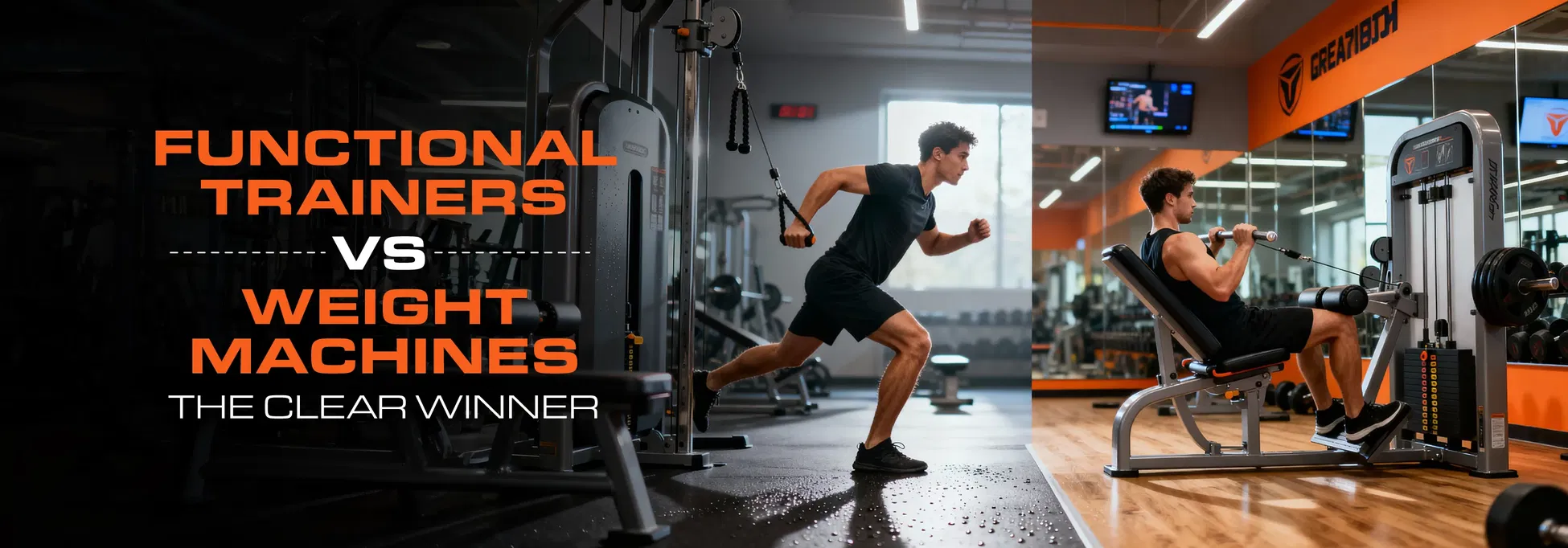
Functional Trainers vs. Weight Machines The Clear Winner
When considering gym equipment, many people compare functional trainers and weight machines. The choice can define workout results for years. Understanding the differences helps you select the right equipment for strength, flexibility, and health.
Functional trainers use adjustable cables and pulleys. They mimic everyday moves like pushing, pulling, and twisting. Unlike weight machines, which only target one muscle, functional trainers let you work several muscles at once. This approach leads to better coordination, balance, and core strength.
Benefits of Functional Trainers
Functional trainers support a wide variety of exercises, so every workout feels fresh. You can target upper body, lower body, and core within one session. They save space and money because you don't need multiple machines.- Versatility: Perform hundreds of exercises. Adjust resistance for all fitness levels. Shift easily from one move to the next.
- Core Engagement: Most exercises force the core to stabilize, building real-world strength.
- Functional Movement: Move naturally improve how you lift, bend, and twist in daily life.
- Safety: Guided cables offer controlled motion, reducing injury risk.
- Adaptable for Everyone: Good for beginners, athletes, and those rehabbing after injury.
- Saves Space: No need for a room full of machines. One trainer can replace many machines.
Weight Machines: A Traditional Approach
Weight machines focus on a single muscle with fixed movements. Think of the leg press, chest press, or lat pulldown. They are safe for beginners and easy to use but limit natural movement and don't always build real-life strength.- Isolation: Good for focusing on one muscle group.
- Fixed Path: Keeps movement safe but lessens flexibility.
- Less Core Use: Core muscles often rest while a single muscle works.
- Limited Exercises: Usually built for a few specific moves.
Key Differences in Table Form
Feature |
Functional Trainers |
Weight Machines |
|---|---|---|
Movement Type |
Multi-directional, free movement |
Fixed path, isolated movement |
Muscles Trained |
Multiple, including core |
Isolates one muscle |
Exercise Versatility |
Hundreds, full-body |
Limited, often single muscle |
Core Engagement |
High |
Low |
Suitability |
All levels, rehab friendly |
Beginners, rehab after surgery |
Space Requirement |
One unit for all |
Many units for full-body |
Real-Life Strength |
Yes |
Less direct |
Cost |
One-time high, but all-in-onegymquipfitness |
Cheaper per machine, needs manygymquipfitness |
Why Functional Trainers Are the Winner?
The goal of exercise is moving and feeling better in everyday life. Functional trainers build practical strength. You get stronger for tasks like carrying bags, climbing stairs, or playing sports. The machines are flexible, so workouts never get dull. With better core engagement, balance, and injury prevention, they deliver results quickly and safely.
Functional trainers also adapt as you improve. You can start simple and add complexity as fitness grows. Older adults, beginners, athletes recovering from injury; all can use the same machine and succeed.
Who Should Choose Functional Trainers?
- Anyone seeking all-in-one, full-body workouts
- People wanting to improve daily movement and balance
- Athletes looking for power and coordination
- Those short on space or with home gyms
- Beginners and older adults who need safe, low-impact options
When Are Weight Machines Useful?
- For isolation during rehab after surgery
- Bodybuilders aiming for hypertrophy in a specific muscle
- Beginners learning form (but quickly should progress)
Final Thoughts
Functional trainers set the standard for smart, total-body training. They boost strength, endurance, and balance all in one device. You learn to move better, feel balanced, and adapt to the real world; not just to the gym.
When you weigh versatility, long-term value, and real-life improvement, functional trainers are the clear winner over weight machines.
 Chat Support?